Anthropic’s Historic IPO: The $93.5 Billion Question Behind AI’s Biggest Debut
Studio Orris · 22 November 2026 · 3 min read
THE ORRIS EDIT | BUSINESS & MARKETS | 22 NOVEMBER 2026
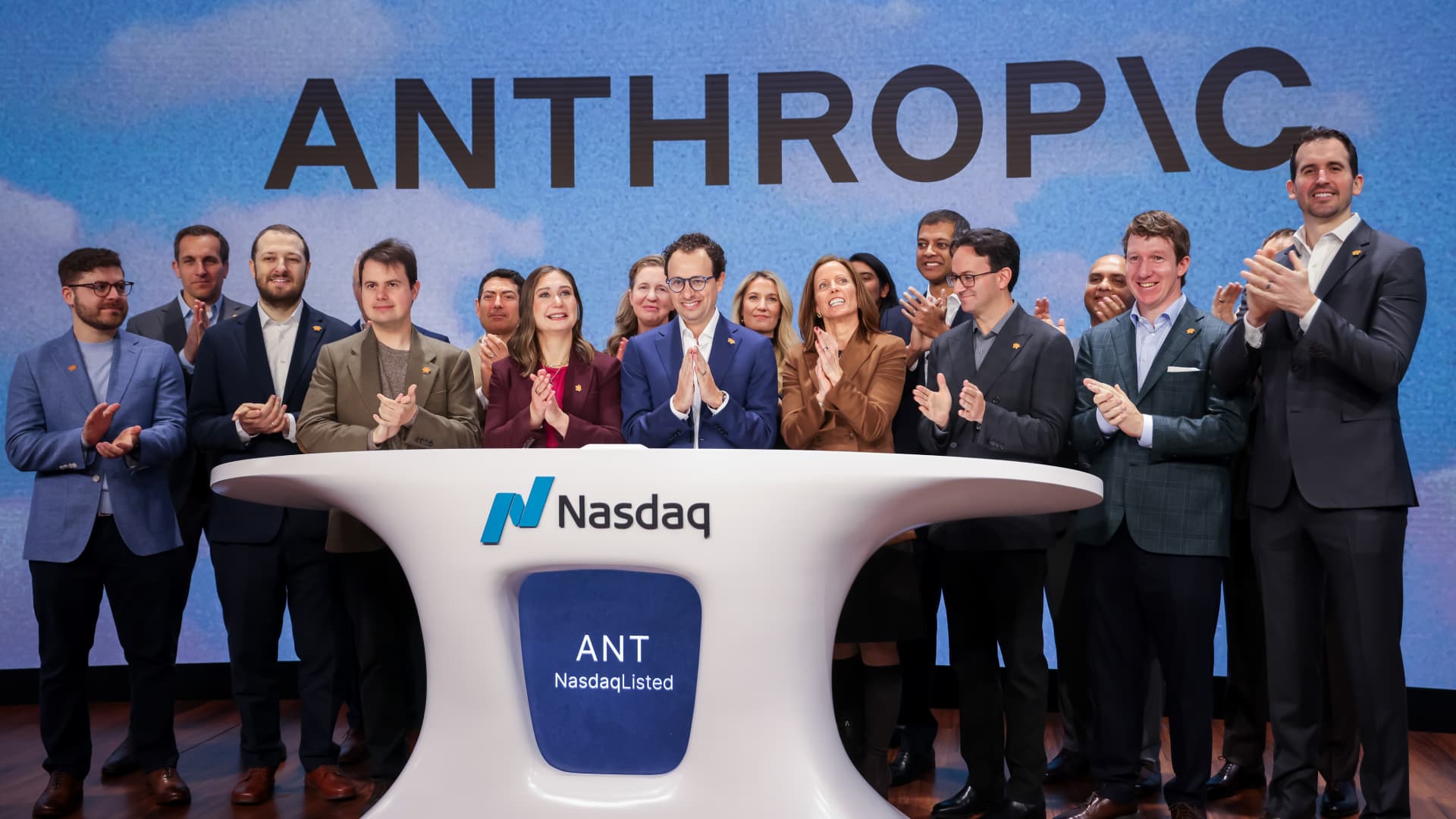
On 19 November 2026, at 11:48 a.m. in New York, Anthropic began trading on the Nasdaq under the ticker ANT.
The applause was inevitable.
The company behind Claude had completed the largest initial public offering in history, placing artificial intelligence at the centre of one of Wall Street’s most significant financial events.
Its shares were priced at US$83, opened at US$111.50, and closed their first trading session at US$97.17.
A 17.1% gain over the offering price. A 12.9% decline from the opening trade.
Both figures are true. Yet they tell remarkably different stories.
The market celebrated Anthropic’s potential. It also began pricing the uncertainty surrounding it.
And for the businesses increasingly building their operations around artificial intelligence, the implications extend well beyond the stock exchange.
01. The Biggest IPO in History. But What Did the Market Actually Say?
The scale of Anthropic’s public debut is difficult to overstate.
The company initially priced 980 million shares at US$83 each, representing an offering of approximately US$81.3 billion.
Following the full exercise of the underwriters’ additional share option, the IPO reached approximately US$93.5 billion in gross proceeds, with roughly US$91.6 billion going to Anthropic itself.
A concurrent private placement raised approximately US$26 billion more.
Together, the transactions represented approximately US$119.5 billion in gross proceeds, including shares sold by existing stockholders.
These figures establish the extraordinary scale of the capital being directed towards frontier artificial intelligence.
But the first trading session introduced a different perspective.
Shares opened more than 34% above their offering price before retreating to US$97.17 by the closing bell.
That closing price still represented a substantial first-day gain for investors allocated shares at the IPO price. However, investors purchasing at the opening trade experienced a decline.
The distinction matters.
An IPO can be a remarkable fundraising success without delivering a straightforward investment success for every participant.
The market’s initial enthusiasm was clear. Its willingness to sustain that enthusiasm at the opening valuation was less certain.
02. Billions In. More Billions Out.
Behind Anthropic’s extraordinary valuation is a business growing at exceptional speed — and spending at an equally extraordinary scale.
The company’s IPO disclosures reported approximately US$16.2 billion in revenue for the first half of 2026, alongside approximately US$80.7 billion in reported net losses over the same period.
These figures reveal one of the central tensions in the AI economy.
Revenue growth is no longer the only measure that matters.
Training advanced models, securing computing infrastructure, acquiring specialised hardware and operating increasingly sophisticated systems require enormous financial commitments.
The commercial opportunity is substantial. So is the cost of pursuing it.
For investors, the question is whether Anthropic can eventually convert its technological capabilities and rapidly expanding customer base into sustainable profitability.
For customers, the question is different.
What happens when the technology your business depends on is provided by a company facing enormous pressure to justify its spending?
Pricing models may evolve. Product offerings may change. Enterprise contracts may become more important. Infrastructure costs may influence how advanced AI capabilities are packaged and sold.
None of these outcomes is inevitable. But they are commercial possibilities businesses should consider when evaluating long-term AI adoption.
The distinction between technological progress and financial sustainability has rarely been more important.
03. You Can Buy the Shares. But Can You Buy Control?
Perhaps the most unusual aspect of Anthropic’s public listing is not its valuation.
It is its governance.
Anthropic operates as a public benefit corporation, with a structure intended to balance commercial objectives with its stated commitment to responsible artificial intelligence development.
Its governance arrangements include multiple classes of shares and a Long-Term Benefit Trust with a distinctive role in board selection.
The result is a structure in which economic ownership and corporate control do not necessarily move together.
Public investors can purchase Class A shares and gain financial exposure to the company.
That does not mean they acquire a proportionate ability to direct its strategic decisions.
The structure raises an important question for public markets:
When a company develops technology with potentially profound social consequences, should control rest primarily with shareholders, founders or a body designed to protect a broader public interest?
There is no simple answer.
Concentrated or specialised governance may help protect long-term priorities from short-term market pressure. It may also complicate conventional expectations of shareholder accountability.
The challenge for Anthropic is demonstrating that its governance arrangements can deliver both responsible oversight and effective commercial decision-making.
For the wider AI industry, the significance is substantial.
This is not simply a debate about who owns a technology company.
It is a debate about who gets to influence the development of increasingly powerful intelligence systems.
04. Two Customers. Nearly a Quarter of Revenue.
Another concern sits beneath Anthropic’s impressive revenue growth: customer concentration.
According to the company’s disclosures highlighted in its IPO coverage, two customers accounted for approximately one-quarter of revenue.
That level of concentration deserves attention.
Large enterprise relationships can be commercially attractive. They can provide substantial recurring revenue, long-term contracts and opportunities for deeper integration.
But dependence on a small number of major customers also creates exposure.
If a significant customer reduces spending, renegotiates terms, changes providers or develops competing capabilities, the financial consequences can be meaningful.
The broader lesson extends beyond Anthropic.
Rapid growth is not necessarily the same as diversified growth.
For companies building AI products, customer concentration creates commercial vulnerability.
For companies purchasing AI services, vendor concentration creates operational vulnerability.
Both sides of the relationship must understand their dependencies.
The businesses best positioned for the next stage of AI adoption may not be those that commit most aggressively to a single platform.
They may be those that retain the flexibility to adapt as the market evolves.
05. The Wall Street Effect: What Changes After an AI Company Goes Public?
Anthropic’s public listing marks an important transition.
The company must now operate under the disclosure obligations, market expectations and scrutiny associated with a publicly traded business.
Quarterly reporting, financial performance and investor expectations become more visible parts of its commercial environment.
That does not mean every product decision will be dictated by Wall Street.
It does mean that financial performance will be examined continuously alongside technological progress.
For enterprise customers, this creates several questions worth monitoring.
Pricing and commercial sustainability
As investors evaluate profitability, AI providers may face greater scrutiny over the relationship between operating costs, usage volumes and revenue.
Businesses should understand how their AI expenditure could change as usage grows or pricing structures evolve.
Product priorities
Public companies must make decisions about where to allocate capital.
Enterprise demand, commercial returns and infrastructure efficiency may influence which capabilities receive the greatest investment.
Platform dependence
The deeper an AI platform becomes embedded in a company’s operations, the more difficult it may become to change providers.
Technical compatibility, data portability and contractual flexibility therefore deserve attention from the beginning.
Governance and accountability
The relationship between shareholders, management and Anthropic’s specialised governance bodies will remain an important test of the company’s operating model.
For businesses, understanding these factors is part of responsible technology procurement — not merely financial analysis.
06. What Does This Mean for Australian Businesses?
The Anthropic IPO may have taken place in New York, but its implications are international.
Australian businesses are increasingly incorporating artificial intelligence into marketing, customer service, research, software development and internal operations.
Many of these systems rely directly or indirectly on a relatively small number of global technology providers.
As AI companies mature, consolidate and face new financial expectations, Australian organisations should consider three practical priorities.
01 — Expect AI pricing to evolve
AI capabilities may become cheaper in some areas as efficiency improves and competition intensifies.
Other services, particularly those requiring significant computing resources or specialised enterprise support, may attract premium pricing.
Businesses should avoid assuming that today’s pricing will remain unchanged.
The priority is to understand the return generated by AI expenditure, rather than simply the cost of accessing a model.
02 — Avoid building your entire business around one vendor
A single-provider strategy may be convenient, but it can create switching costs and operational exposure.
Where practical, businesses should consider flexible integrations, documented workflows, portable data and contingency arrangements.
The objective is not to avoid leading AI platforms.
It is to ensure that adopting them does not unnecessarily restrict future choices.
03 — Build intelligence into your strategy, not just your software
Artificial intelligence is most valuable when it supports better business decisions.
That requires more than purchasing subscriptions or automating isolated tasks.
It requires understanding customer behaviour, evaluating scenarios, measuring performance and connecting technology investments to meaningful commercial outcomes.
For Australian businesses, the opportunity is to move beyond experimentation towards disciplined, measurable and strategically informed AI adoption.
07. The Next Phase of AI Will Be Defined by More Than Intelligence
Anthropic’s IPO represents a defining moment for the commercialisation of artificial intelligence.
It demonstrates the extraordinary confidence investors have placed in the sector.
It also exposes the scale of the financial, operational and governance questions that remain unresolved.
Can frontier AI providers achieve sustainable profitability?
Can companies balance shareholder expectations with long-term safety commitments?
Will increasingly powerful AI infrastructure become concentrated among a handful of providers?
And how can businesses capture the benefits of these technologies without surrendering too much flexibility or control?
These are not questions that can be answered by a single trading session.
But they are questions that will increasingly shape the business environment.
The companies that succeed in this next phase will need more than access to powerful technology.
They will need the judgment to understand its economics, the discipline to manage its risks and the strategic clarity to use it effectively.
The Orris Perspective
The most important number in Anthropic’s IPO may not be its valuation. It may be the cost of the future that valuation assumes.
The listing marks a significant milestone in the development of artificial intelligence as a global commercial industry.
Yet the real test begins after the celebration.
For Anthropic, that means demonstrating that technological ambition can translate into durable financial performance.
For investors, it means understanding the difference between extraordinary potential and realised value.
For Australian businesses, it means recognising that AI is no longer simply an emerging technology.
It is becoming critical commercial infrastructure — and infrastructure requires strategy, resilience and accountability.
At Studio Orris, we believe the most valuable business decisions begin by examining what lies beneath the headline.
Because the future rarely belongs to those who react first.
It belongs to those who understand what comes next.
⸻
The Orris Edit is an editorial series by Studio Orris examining the intersection of business, technology, markets and strategy.
The part they missed.
Explore Studio Orris: https://studioorris.com.au
Editorial note: Financial figures are reported in US dollars unless otherwise stated. Market prices reflect Anthropic’s first trading session on 19 November 2026. This article provides general business commentary and does not constitute investment advice.